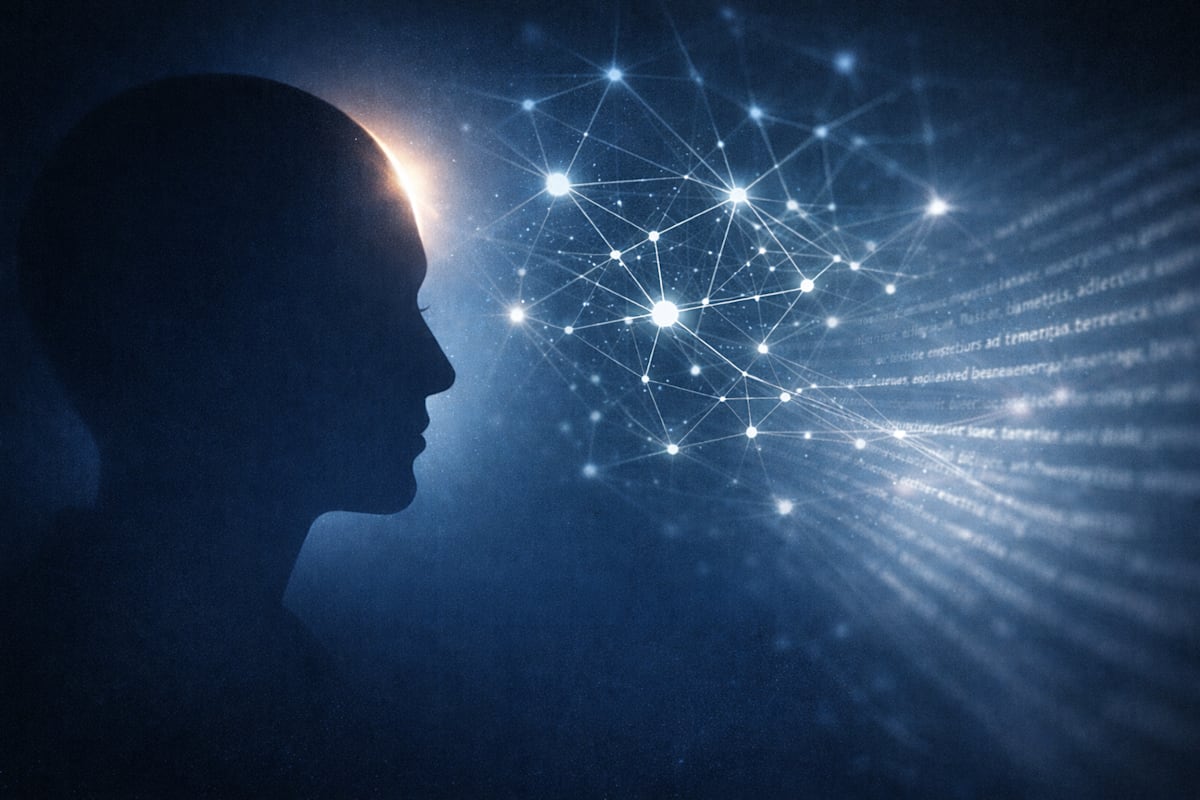
Let us have a quiet word about artificial intelligence. Not a shouting match. Not a Twitter pile-on. Just a civilised cup of tea, a biscuit, and a small amount of perspective.
Every few weeks I see it again:
"AI is not writing."
"AI will destroy fiction."
"This is the end of real authors."
At which point I glance at my word processor, my spelling checker, my grammar assistant and my auto-saving cloud backup… and raise an eyebrow.
Because unless you are chiselling your manuscript into stone with a sharpened pebble, you are already using technology.
The question is not whether tools are involved.
The question is who is doing the thinking.
The Mind Is the Author
Let me ask something slightly uncomfortable.
If a writer loses the use of their hands tomorrow but their imagination remains ferocious, are they no longer an author?
If illness steals speech but not intellect, does that invalidate the stories still forming inside their mind?
We rightly celebrate figures such as Stephen Hawking, whose voice became electronic but whose ideas remained entirely his own. No one suggested his equations were less authentic because they passed through machinery.
Yet in fiction, some are suddenly very concerned about purity.
Curious, that.
Imagine the Neural Leap
Humour me for a moment.
Imagine that in ten or twenty years, a neural interface allows a writer to translate thought directly into structured language through an AI system.
No typing.
No dictation.
Just intention becoming prose.
Would that writer be cheating?
Or would they simply be using the most efficient pen ever invented?
If the originating consciousness is human, the characters humanly conceived, the themes rooted in lived experience, what exactly has been lost?
It seems to me that what troubles people is not authorship. It is visibility.
When assistance becomes obvious, it feels unsettling.
But writing has never been a pure act of isolated genius. It has always involved tools, editors, influences, conversations and revisions. The solitary myth is just that: a myth.
The Grammarly Paradox
Here is where I gently tweak the tail of the outraged author.
Many of the loudest critics of AI have no issue with:
- Automated grammar suggestions
- Predictive text
- Style enhancement software
- Algorithm-driven editing advice
They happily accept a better adjective from a machine. They just object when the machine offers a paragraph.
The line between tool and collaborator is not moral. It is arbitrary.
And if we are honest, it is moving.
This Is Not About Replacement
There is a difference between using AI lazily and using it deliberately.
If someone asks a machine to "write me a bestselling fantasy trilogy" and copies the result without thought, that is not authorship. It is outsourcing.
But if a writer engages critically, directs, rejects, reshapes and refines, the human mind remains firmly in charge.
In my own experiment, Echoes from the Void, I did not ask a machine to feel. I asked it to examine language. The point was not to replace the writer, but to explore where the boundary lies.
The boundary, as it turns out, is not where the shouting suggests.
A Brief Word About Book Burning
History offers a warning.
When societies become anxious about new forms of expression, they often respond with prohibition. Books are banned. Ideas are labelled dangerous. Fires are lit, metaphorically or otherwise.
The fear is rarely about paper and ink. It is about control.
New tools that expand who can write, how they can write and what barriers they can overcome will always provoke discomfort. That does not make them evil. It makes them disruptive.
And disruption is not the same as destruction.
Should You Panic?
Probably not.
Readers still crave human insight. They still respond to emotional truth. They still want stories born of experience.
No machine can live your life for you.
But machines can help you express it.
So perhaps, instead of lighting torches, we might consider sharpening our thinking.
Because the future of fiction will not be decided by outrage.
It will be decided by writers who understand that tools evolve, but imagination remains stubbornly, gloriously human.
Now, shall we put the kettle on? Anyone got a biscuit I can dunk?
Copyright © Brittle Media Ltd 2026