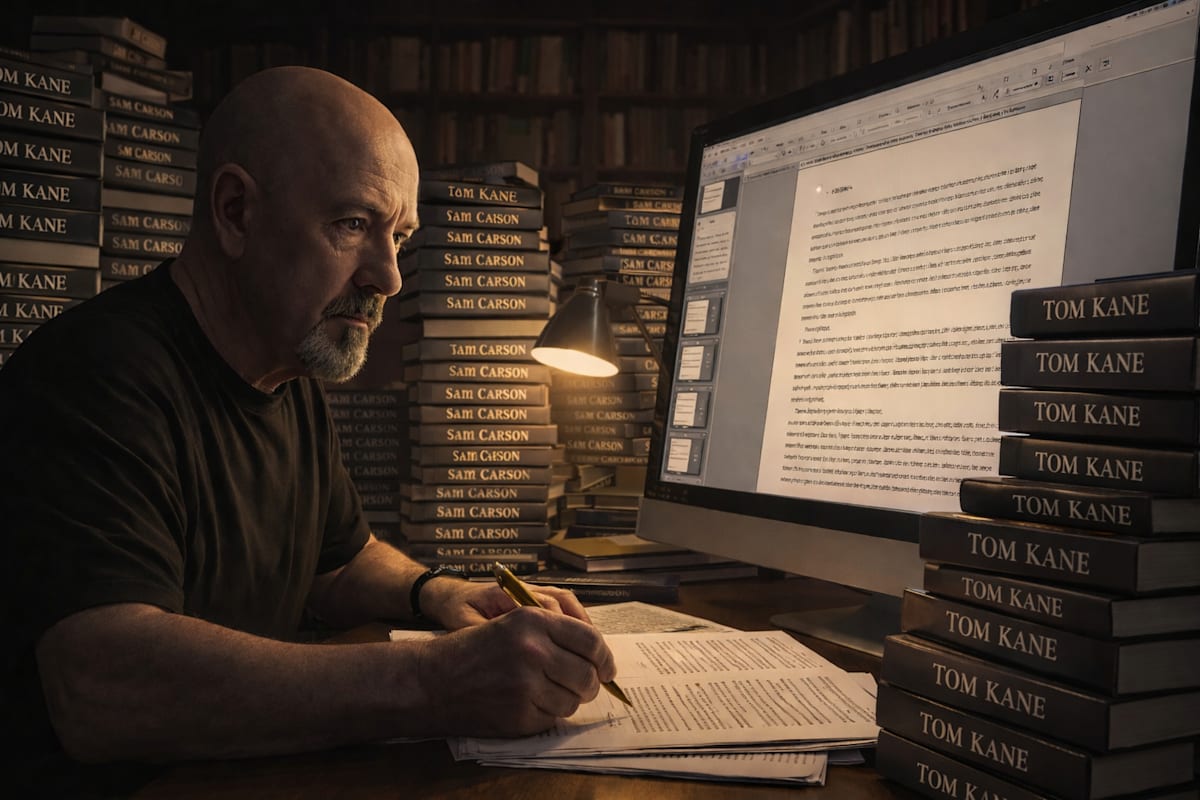
Every so often someone declares that independent authors are disrupting the publishing industry.
It makes for a good headline.
The only problem is that it isn’t true.
Independent authors are not new. In fact, the idea that writers should control their own publishing is older than the modern publishing industry itself. What we are witnessing today is less a revolution and more a return to tradition.
Long before global publishing conglomerates existed, authors were often deeply involved in how their work reached readers. They negotiated with printers, financed editions, oversaw revisions, and sometimes created their own publishing platforms. In modern terms we would simply call them independent or self-published authors.
Take Charles Dickens. His novels were famously released in serial form, chapter by chapter, building an eager readership long before the complete books appeared. Later he went even further, editing and publishing his own literary magazines, Household Words and All the Year Round. Through those publications Dickens controlled not only what he wrote, but how and when readers experienced it.
Another Charles followed a similar path.
When Charles Darwin published On the Origin of Species, he took an unusually active role in shaping the production of the book and its successive editions. Darwin understood that ideas, however revolutionary, still needed careful publishing to reach the world.
Then there was Beatrix Potter. When publishers rejected The Tale of Peter Rabbit, she simply had it printed privately. That modest self-published edition eventually grew into one of the most successful children’s books in history.
Even Virginia Woolf joined the ranks of author-publishers. Together with Leonard Woolf she founded the Hogarth Press in 1917, publishing her own work while also championing other influential writers of the era.
These authors were not rebels. They were simply pragmatic. They wanted their stories and ideas to reach readers, and they were prepared to take responsibility for making that happen.
Fast forward to today and the tools have changed dramatically. Instead of ink, lead type and hand-operated presses, modern authors have digital platforms capable of distributing books worldwide at the click of a button. Online bookstores, e-readers and print-on-demand technology have transformed the mechanics of publishing.
In other words, the modern indie author or self-publishing writer is simply continuing a tradition that has existed for centuries.
Yet the principle remains exactly the same.
The author writes the book.
The author ensures it reaches readers.
In many cases the author also becomes the publisher.
That is the model I follow through Brittle Media Ltd., the small independent publishing company behind my own books. Through it I have been able to publish stories ranging from historical fiction and wartime espionage to speculative time travel and poetry.
It is a modest enterprise compared with the great publishing houses of London or New York, but it operates according to the same essential purpose: to bring stories into the world.
In that sense, the modern indie author stands in respectable company.
Dickens did it.
Darwin did it.
Potter did it.
Woolf did it.
The technology has changed, but the spirit remains familiar.
Publishing, it turns out, is a wheel.
And every so often it turns full circle.
If you are curious about the kinds of stories that can emerge from an independent publishing path, you can explore the worlds I write through Brittle Media Ltd., from wartime espionage in The Midnight Series to sweeping historical drama in The Brittle Saga, along with a few excursions into time travel and poetry along the way.
Copyright © Tom Kane 2026