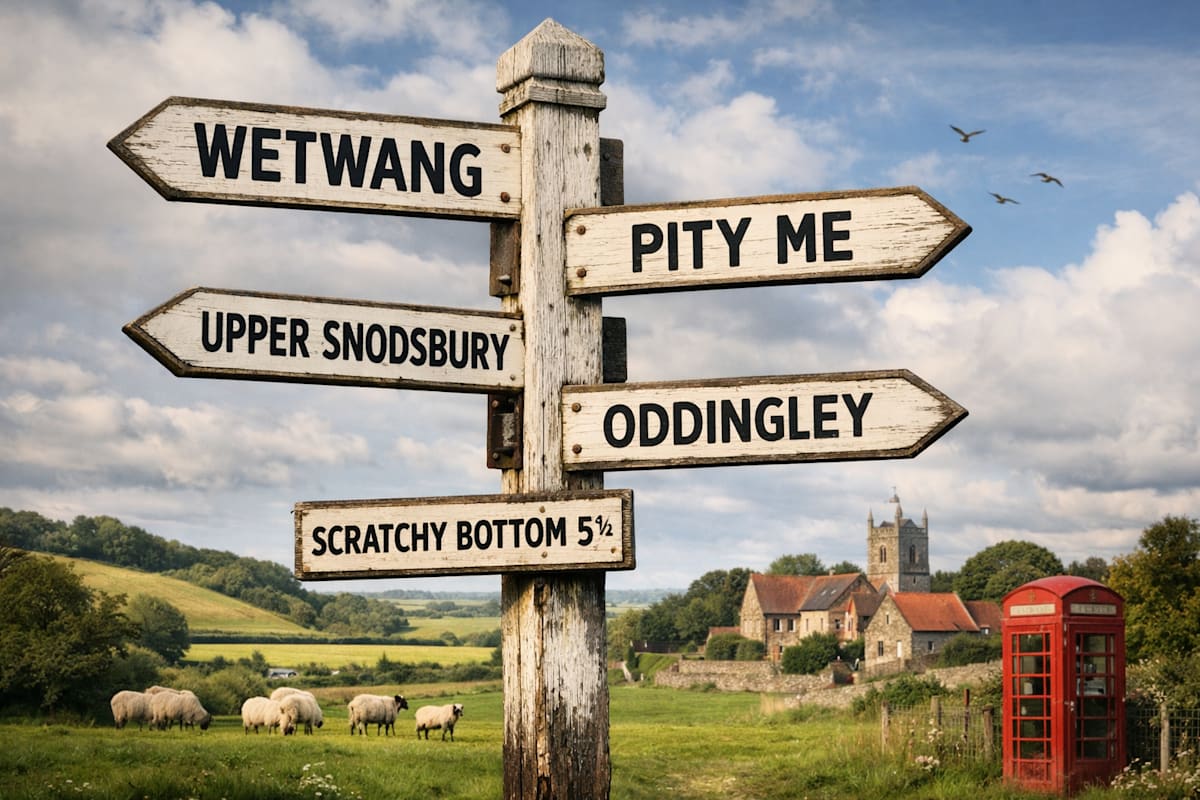
England has a long and proud tradition of naming places in ways that make perfect sense to people who have been dead for several centuries.
Take Oxford Circus, for example.
I’ve been there many times. I’ve never seen a strongman, a trapeze artist, or even a confused clown. Just shoppers, tourists, and the occasional person standing still in the middle of the pavement wondering why everyone else looks annoyed.
The truth is rather less dramatic. “Circus” comes from the Latin circus, meaning a circular space. When the junction was laid out in the early nineteenth century, the name simply described its shape. Sensible. Accurate. Entirely lacking in elephants.
Still, it does feel like a missed opportunity.
Mousehole: Bigger Than You Think
Down in Cornwall sits the village of Mousehole.
Pronounced “Mowzel” (because Cornwall), Mousehole is neither a hole nor particularly mouse-friendly. The name likely comes from the Cornish Porth Enys, meaning “harbour of the island”. Over time, English ears did what English ears do and turned it into something more… rodent-based.
Tourists arrive expecting novelty. What they get instead is a very pretty harbour and the realisation that English place names are not here to help you.
Sandwich: No Lunch Included
Yes, Sandwich is real.
No, it was not named after lunch. The town predates the edible sandwich by many centuries. The word comes from the Old English wic, meaning a trading settlement, and sand, referring to the coastal geography.
The Earl of Sandwich came later and merely borrowed the name. Which feels unfair, given how much expectation it now carries.
Then there’s Slough.
“Slough” comes from an Old English word meaning bog or muddy place. It’s honest. Brutally so. No branding agency would allow it today, but medieval England believed in telling it like it was.
You lived near mud. The name said mud. Job done.
Why We Keep Them
What I love about these names is that nobody ever thought to fix them.
England doesn’t rename places to make them sound impressive. We keep them as they are: confusing, misleading, occasionally hilarious. They are linguistic fossils, reminders that the country has been muddling along for a very long time, layering meaning on top of meaning until the original sense is almost entirely buried.
And perhaps that’s the point.
A “circus” without performers. A “mousehole” without mice. A “sandwich” without bread. They tell us something important about history: things change, names remain, and if you’re lucky, they make you smile while you’re standing in the rain waiting for a green light that never seems to come.
Onwards and upwards. Even if the signposts are lying.
Copyright © Tom Kane 2026